
Measurement & Methods
Volumetric Pipettes and Micropipettes: When to Use Each
Compare volumetric pipettes and micropipettes through working volume, liquid properties, volume setting and laboratory control needs.
Published October 21, 2026
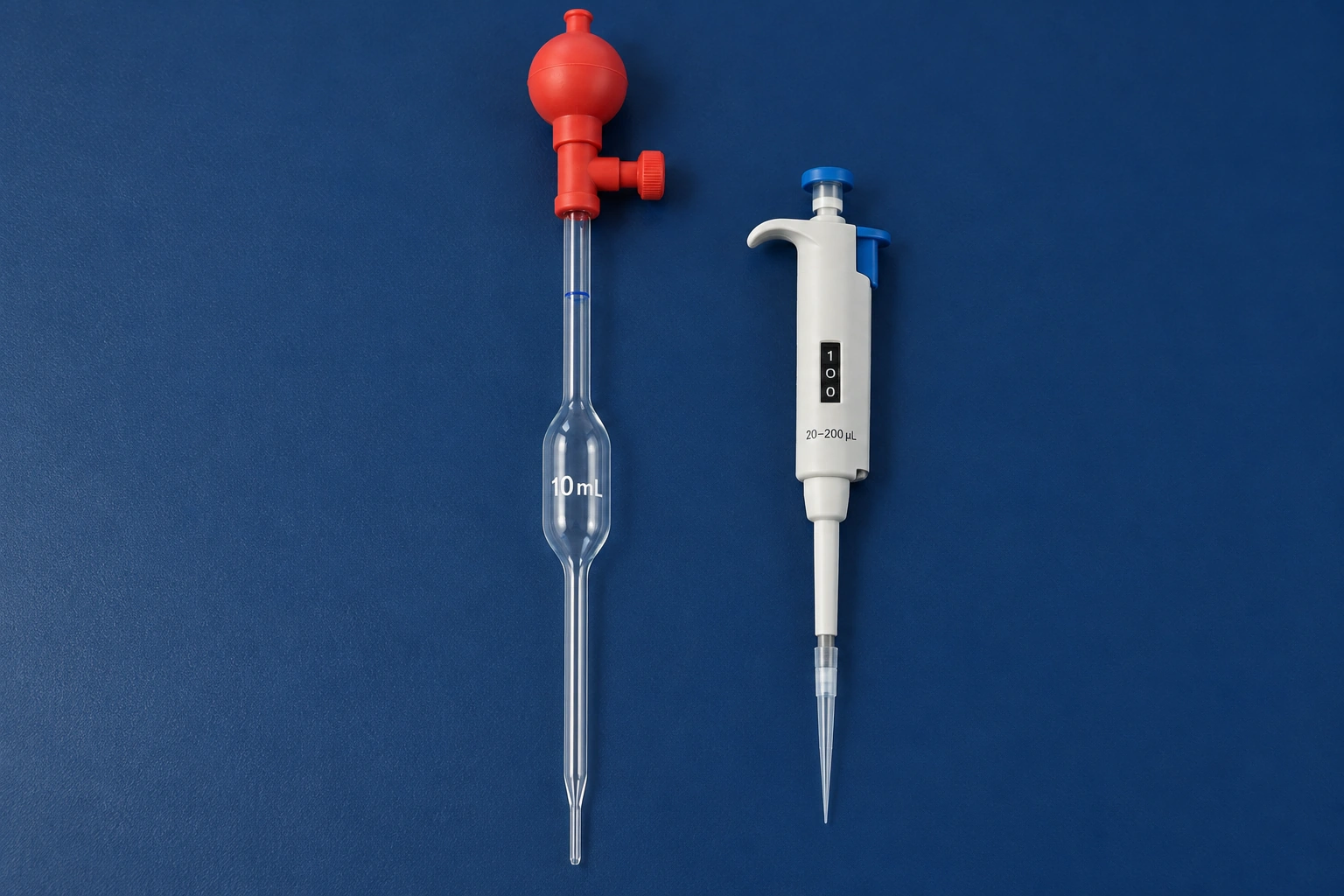
Volumetric pipettes and micropipettes should be selected around the required volume and task. A single-mark glass volumetric pipette is designed for a particular nominal volume according to its markings. Micropipettes come in several forms, including fixed-volume and adjustable models, with their own ranges and instructions.
A useful comparison goes beyond “glass for larger amounts, micropipettes for smaller ones”. Liquid properties, the method, repetition, supporting materials and equipment control all matter. Start with the actual transfer requirement, then match it to the specification and the laboratory’s approved procedure.
Record the volume and work pattern
Write down the target volume and its unit. Separate repeated use of one volume from work involving several changing volumes. A number without a unit can lead to the wrong selection before anyone examines the equipment specification.
In a fictional example, one task transfers a fixed nominal volume during solution preparation, while another needs several smaller additions. They do not necessarily call for the same equipment. Avoid grouping them together merely because both are described as pipetting.
Include the number of repetitions and the receiving containers. Available space, container shape and operator workflow can add practical constraints. These details help a supplier understand the application while complementing, rather than replacing, the method’s requirements.
Recognise how the volume is set
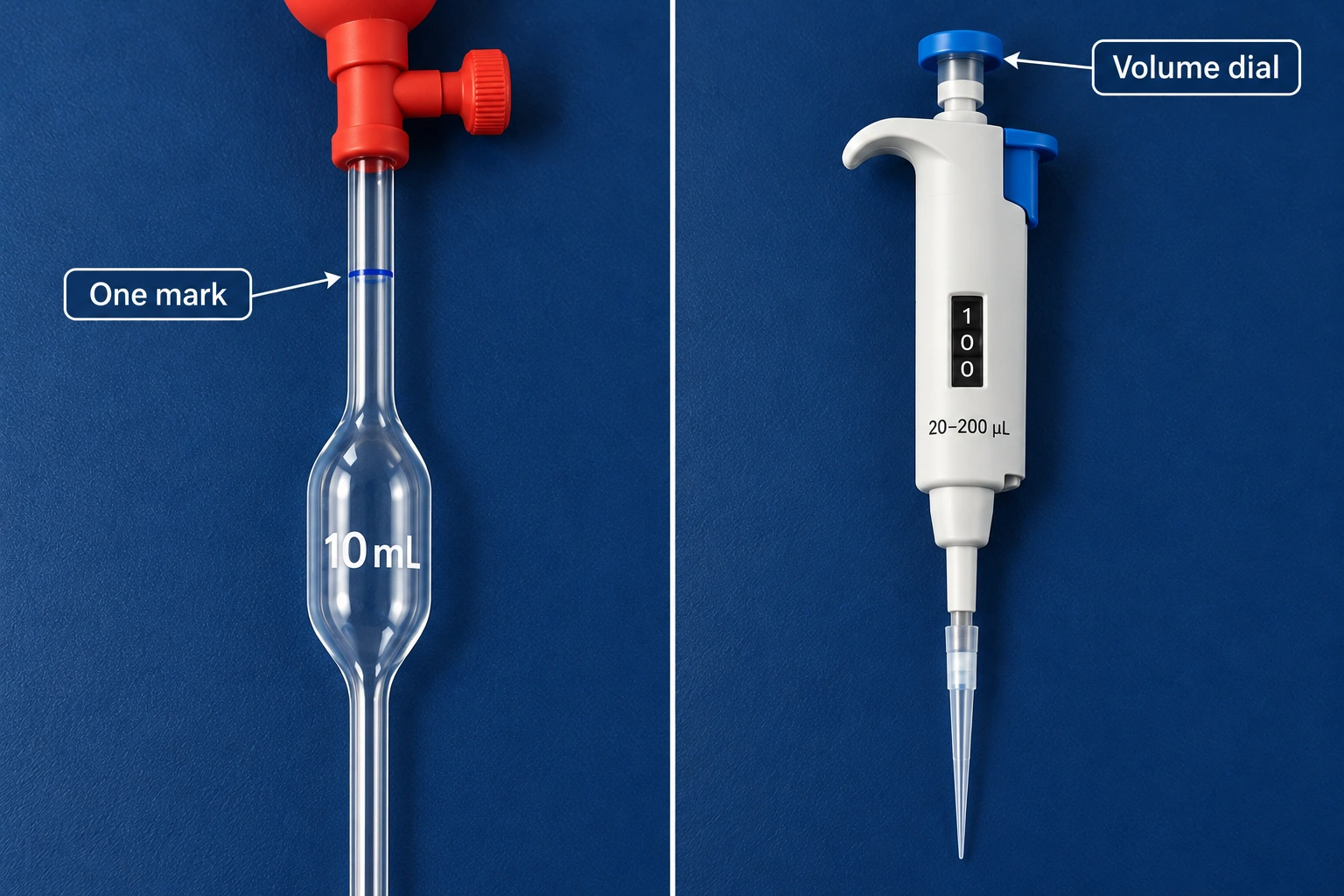
For the example single-mark glass volumetric pipette, the nominal-volume marking and calibration line help identify the instrument. Actual use follows its type, markings and instructions. A discharge habit appropriate to one pipette should not automatically be applied to every other type.
An adjustable micropipette lets the user select a volume within the model’s range. Its display must be read according to the device’s unit and format. Fixed-volume micropipettes also exist, so the word micropipette does not automatically mean its volume can be changed.
The DWK volumetric-pipette range illustrates the importance of product specifications. Record the model identity, nominal volume and relevant markings instead of choosing solely by the familiar bulb shape of the glass.
Consider the liquid and transfer system
Different liquids can need different approaches. Viscosity, volatility, temperature and material compatibility are relevant information when selecting equipment. A result obtained with water should not automatically be taken to represent every sample.
Eppendorf’s science of pipetting guide discusses factors affecting liquid transfer. Use it alongside the laboratory method and model instructions rather than taking one technique and applying it unreviewed to all liquids.
Use a suitable pipetting aid for glass pipettes; never pipette by mouth. For micropipettes, match tips and accessories to the recommended system. A tip that appears to fit tightly does not by itself establish that every performance requirement has been met.
Compare supporting requirements
| Aspect | Glass volumetric pipette | Micropipette |
|---|---|---|
| Volume | Defined by nominal volume and type | Fixed or within the model’s range |
| Supporting materials | Pipetting aid and cleaning requirements | Suitable tips and accessories |
| Repeated use | Follow equipment and method procedures | Follow model and method procedures |
| Control | Identity, condition and relevant verification | Identity, condition and relevant verification |
This is not an accuracy ranking. Results need assessment against the specification, working volume, technique and controls used. Claiming that one category is always more accurate overlooks the equipment and conditions being compared.
Evaluate cost as a system: equipment, supporting materials, cleaning or replacement and required checks. Comparing the price of one glass pipette with one box of tips does not establish the cost of serving the same workload.
Prepare checks before routine use
On receipt, match the model, volume, documents and accessories to the order. Inspect physical condition according to laboratory procedure. Resolve an identity discrepancy before using the item as a replacement for something else.
Define performance verification and acceptance criteria around the method’s needs. Record the instrument, checking conditions and relevant results. An easy-to-read scale or smooth-feeling piston is not sufficient evidence that delivered volumes meet the requirement.
Where operators are new to the equipment, provide orientation using its instructions. Differences in filling, dispensing or reading the volume can affect outcomes. Practice should use suitable materials and conditions under a laboratory owner who understands the method.
Select from the task, then confirm the specification
Bring a summary of volumes, liquid types, containers, repetitions and method requirements when requesting a quotation. Ask which parts are included and which supporting materials must be obtained separately. This makes the comparison more meaningful than category names alone.
Read choosing glass or plastic labware for material considerations. When discussing needs with Trias, request confirmation of the exact model against the written application. The appropriate choice is equipment that meets the task and its controls, rather than a category presumed superior in every situation.